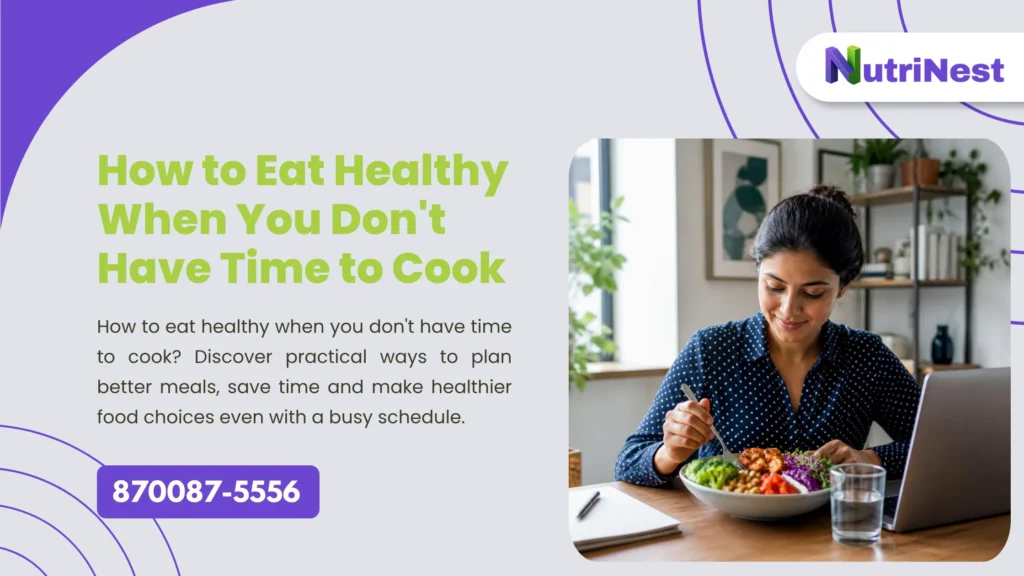
How to Eat Healthy When You Don't Have Time to Cook
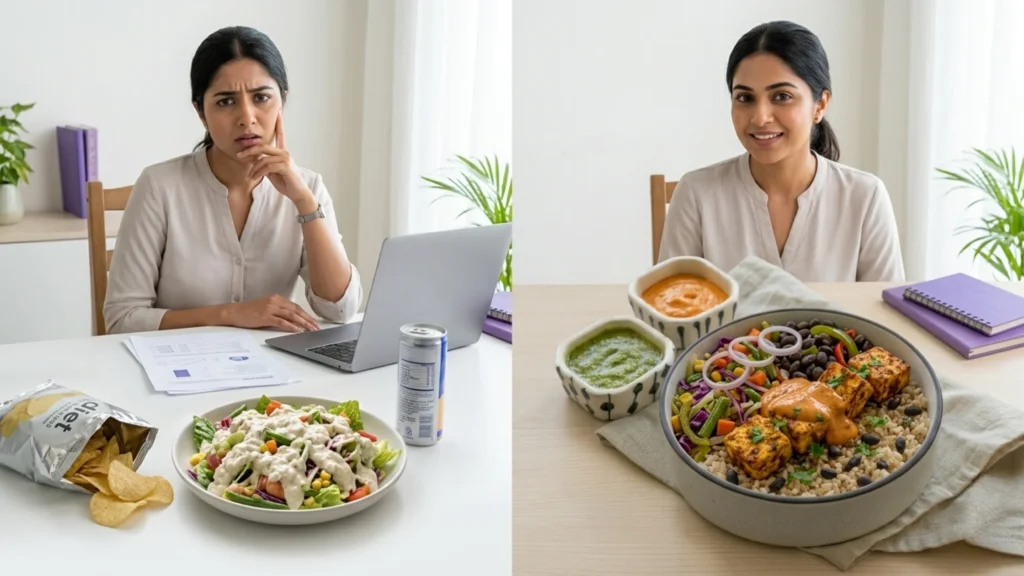
How to eat healthy when you don’t have time to cook is a question many busy people struggle with. You may know “what a balanced meal looks like, but knowing what to eat & actually preparing it” are two very different things.
Between work, commuting, meetings, workouts, family responsibilities and everything else – that fills a normal day, cooking can easily move to the bottom of the list.
Then hunger takes over.
You order something quickly, eat whatever is available, and tell yourself – you’ll plan better tomorrow.
The good news is that eating healthy doesn’t require you to “cook every meal from scratch.”
You can build a healthier routine – by making a few practical changes, planning the meals that matter most and keeping convenient options available when your schedule gets busy.
Why Eating Healthy Gets Difficult When You're Busy
The problem usually isn’t a “lack of information.”
Most people already know that – vegetables, fruits, protein, whole grains and minimally processed foods can be part of a healthy diet.
The problem is time and convenience.
When you’re tired after work – spending an hour preparing dinner may not feel realistic. When you’re rushing between meetings, preparing a balanced lunch may be impossible. And when you haven’t planned anything, ordering the easiest option becomes the obvious choice.
This is why “healthy eating for busy people needs to be practical.”
You don’t need a perfect meal plan.
You need a system that ––works even on your busiest days.
1. Stop Thinking You Have to Cook Every Meal
One of the biggest misconceptions about healthy eating is – that every meal has to be prepared at home.
It doesn’t.
- Cooking at home can be excellent – but it isn’t the only way to eat well.
- You can combine different approaches:
- Cook when you have time
- Prepare some ingredients in advance
- Keep simple foods available
- Choose healthier ready to eat options
- Use healthy meal delivery when cooking isn’t practical
- Plan your meals around your actual schedule
The goal is to make healthy eating easier to maintain – not to create another demanding responsibility.
If you know Wednesday is packed with meetings – don’t create a meal plan that requires you to spend 90 minutes cooking Wednesday evening.
Plan for reality.
2. Identify the Meal You Struggle With Most
You don’t necessarily need to reorganise your entire diet.
Start with the meal – that causes the most problems.
For some people, it’s breakfast.
For others, lunch is difficult because they’re at work.
For many busy professionals – dinner becomes the problem because they’re too tired to cook after getting home.
Ask yourself –
“Which meal am I most likely to replace with an unhealthy convenience option?”
Once you identify it – find a reliable solution for that particular meal.
If lunch is the problem – prepare lunch the night before.
If breakfast is rushed, keep simple breakfast ingredients ready.
If dinner is difficult – consider preparing meals in batches or using a “healthy meal delivery service.”
One good system is often better than – trying to completely change everything at once.
3. Keep Easy Healthy Foods at Home
When you’re hungry – you don’t want to start from zero.
Keep foods that require little preparation readily available.
Depending on your preferences, that could include –
- Fresh fruit
- Curd or yoghurt
- Nuts & seeds
- Eggs
- Oats
- Whole grain bread
- Vegetables – that are easy to prepare
- Cooked legumes
- Paneer or other protein sources
- Simple salad ingredients
The idea is to reduce the number of steps between “I’m hungry” and “I have something sensible to eat.”
This is particularly useful on days when your schedule changes unexpectedly.
4. Use Simple Meal Combinations
Healthy meals don’t have to involve “complicated recipes.”
A practical meal can be built around a few basic components –
Protein + vegetables + a suitable carbohydrate source + healthy fats
For example – you might combine a protein source with vegetables and rice, roti or another whole grain option.
The exact combination depends on – your nutritional needs, preferences & overall diet.
The important thing is to avoid turning healthy eating into a cooking competition.
A meal that takes 15 minutes and that you can repeat consistently may be more useful – than a complicated recipe that takes an hour and gets abandoned after three days.
5. Meal Prep Doesn't Have to Mean Cooking for the Entire Week
When people hear “meal prep” –– they sometimes imagine seven identical containers lined up in the refrigerator.
It doesn’t have to be that way.
You can simply prepare a few components ahead of time.
For example –
- Wash and cut vegetables
- Cook a batch of grains
- Prepare a protein source
- Make a simple dressing
- Portion snacks
- Keep ingredients organised
Then combine them differently during the week.
Even preparing two or three meals ahead – can reduce the amount of cooking you need to do on busy days.
A Simple Meal Prep Strategy
Choose one day – when you have a little more time.
Prepare enough basic ingredient for several meals.
Then keep the rest of your week flexible.
This approach gives you structure without making your entire week dependent on one meal-preparation session.
6. Choose Healthy Food When You Order
You don’t have to stop ordering food – to eat healthier.
Instead, become more selective about what you order.
When looking at a menu, consider –
- Is there a vegetable component?
- Is there a reasonable protein source?
- Is the meal heavily fried?
- Are there sauces or dressings – that add a lot of calories?
- Is the portion much larger than you need?
- Can you choose a grilled, baked or otherwise less heavily processed option?
You don’t need to analyse every gram of food.
Just make the better choice more often.
If you regularly order meals through Zomato or Swiggy – look beyond individual cravings and identify a few healthy meals or restaurants you genuinely enjoy.
That creates your own list of convenient options.
7. Consider Healthy Meal Delivery When Cooking Isn't Practical
Sometimes the most practical answer to “How can I eat healthy without cooking?” is simply to – let someone else prepare the meal.
A healthy meal delivery service can be useful “when you want a proper meal” but don’t have the time or energy to cook.
NutriNest, for example – offers fresh healthy food options including salads, bowls, wraps, snacks and protein-focused meals.
For customers who want greater consistency – NutriNest also offers healthy meal subscription plans, so you don’t have to decide what to order every day.
This is particularly useful for people who already know they struggle with meal planning.
Instead of asking:
“What should I eat today?”
you have a meal plan already built into your routine.
If you’re specifically looking for a regular healthy meal option in Faridabad, you can also explore our Healthy Meal Subscription Plans in Faridabad.
And if you live in Sainik Colony, you can refer complete details through Healthy Food Delivery in Sainik Colony, Faridabad.
8. Make Your Lunch Easier
Lunch is one of the meals most likely to get disrupted by work.
You may have back to back meetings, a short lunch break or simply no time to leave the office.
That makes lunch planning especially important – for working professionals.
If you frequently struggle with office meals, consider creating a fixed lunch routine.
For example:
Option 1 – “Prepare lunch the night before.”
Option 2 – “Prepare several lunches together.”
Option 3 – “Choose a reliable healthy meal delivery option.”
Option 4 – Use a meal subscription when you want regular meals without daily ordering.
NutriNest also offers Office Lunch Delivery in Faridabad for people who want a convenient alternative to typical office food.
The objective isn’t to make lunch complicated.
It’s to make sure – hunger doesn’t make the decision for you.
9. Don't Ignore Protein
If you’re trying to eat healthier – don’t focus only on reducing calories or eating salads.
Protein is an important part of a balanced diet and plays a role in maintaining and repairing “body tissues.”
Your individual protein requirement depends on factors such as – age, body size, activity level and overall health.
If you’re interested in understanding the basics, read our guide on – How Much Protein Do You Actually Need Every Day?
For people who exercise regularly, protein may deserve particular attention.
NutriNest also offers High Protein Meals in Faridabad for customers looking for protein-focused meal options.
The key is not to assume that “more protein” automatically means “healthier.”
Your overall diet matters.
10. Don't Build Your Routine Around Weight Loss Alone
When people start eating healthier – the first goal is often weight loss.
But healthy eating has a much broader purpose.
A practical meal routine can help you:
- Eat more consistently
- Include more nutritious foods
- Reduce dependence on random convenience meals
- Make meal planning easier
- Support an active lifestyle
- Spend less time deciding “what to eat”
If weight management is one of your goals, food choices matter, but there is no single meal or food that guarantees weight loss.
NutriNest also has a dedicated guide on Weight Loss Meals in Faridabad if you’re exploring healthier meal options for your routine.
11. Use a Subscription If Decision Fatigue Is the Problem
Some people don’t need help with cooking.
They need help with deciding “what to eat every day.”
This is where meal subscriptions can be particularly useful.
With a subscription, you make fewer food decisions throughout the week.
You choose a plan once and then have meals arranged according to that plan.
For people who regularly order food because they haven’t planned anything, this can be a meaningful change.
If you’re wondering whether this approach is actually worth the money, we’ve covered the decision in detail in – Is a Healthy Meal Subscription Worth It?
12. Keep Your Busy-Day Strategy Simple
Not every day needs to be perfect. You can create two meal strategies:
Normal Days
When you have enough time:
- Cook
- Meal prep
- Try new recipes
- Shop for fresh ingredients
Busy Days
When everything gets hectic:
- Use prepared ingredients
- Keep quick healthy foods available
- Order a balanced meal
- Use your meal subscription
- Avoid skipping meals and then overeating later
This distinction makes healthy eating much more realistic.
You don’t need one perfect system.
You need a Plan A and a Plan B.
13. Don't Confuse Healthy Eating With Perfect Eating
You will have days when you eat out.
You will have days when you order something indulgent.
You will have days when you don’t have time to think about nutrition at all.
That’s normal.
A healthy eating pattern is about what you do consistently – not whether every single meal is perfect.
If most of your regular meals are reasonably balanced, an occasional restaurant meal isn’t going to erase your efforts.
Think in terms of patterns rather than – “individual meals.”
What Does a Healthy Meal Look Like?
There isn’t one universal meal that is “healthy” for everyone.
However, a balanced meal often includes a combination of vegetables or fruit, a protein source & an appropriate carbohydrate source, with the overall diet providing variety.
The World Health Organization describes a healthy diet using the principles of – adequacy, balance, moderation and diversity. It also recommends that “people over 10 aim for at least 400 grams of fruits & vegetables per day.“
The practical takeaway is simple –
Don’t focus on one “superfood.”
Focus on the overall pattern of your meals.
A Simple 5 Minute Healthy Eating Checklist
When you don’t have time to cook, ask –
- Do I have a protein source?
- Can I add vegetables or fruit?
- Am I choosing a reasonable portion?
- Is there a less processed option available?
- Can I make this meal easier for tomorrow?
These questions take seconds.
And they can help you make better decisions even when – your schedule is chaotic.
Healthy Eating for Busy Professionals: A Realistic Approach
If you’re working long hours – the answer probably isn’t to suddenly start cooking three elaborate meals every day.
Instead, make your routine easier.
“Prepare breakfast ingredients in advance.”
Keep simple snacks available.
Have a lunch plan.
Know what you’re going to eat for dinner before you’re starving.
And have a reliable backup for days – when cooking simply isn’t possible.
That backup could be a healthy meal delivery service – a subscription or a few simple meals you know you can prepare quickly.
Healthy eating becomes much easier when “you stop relying on willpower alone.”
Final Thoughts
You don’t need more hours in the day to start “eating better.”
You need a system – that works with the hours you already have.
Cook when you can.
Prepare a few things ahead.
Keep simple healthy foods available.
Choose better options when ordering.
And when your schedule leaves no time for cooking – don’t treat that as a reason to give up on healthy eating.
A healthy meal delivery service or subscription can simply become another tool in your routine.
Because the goal isn’t to eat perfectly.
It’s to make eating well practical enough that you can keep doing it—even on the days when you don’t have time to cook.
Frequently Asked Questions
How can I eat healthy if I don't have time to cook?
Start by “making your meals simpler.” Keep easy healthy foods available, prepare a few ingredients in advance, choose healthier ready to eat options & consider healthy meal delivery on particularly busy days. You don’t need to cook every meal from scratch – to maintain a “balanced eating routine.”
What are the best healthy foods for busy people?
Foods that require little preparation are often the easiest to maintain – such as fruits, yoghurt, eggs, nuts, oats, prepared vegetables, whole grains and convenient protein sources. The best options are ultimately the foods – that fit your preferences and routine while contributing to a balanced diet.
Can I eat healthy without meal prepping?
Yes. Meal prep can make healthy eating easier – but it isn’t essential. You can cook simple meals, keep basic ingredients ready, use healthy ready to eat options or choose a meal delivery service – when you don’t have time to cook.
Is healthy food delivery a good option for busy professionals?
It can be. Healthy food delivery can save cooking time and provide a more convenient alternative – when your work schedule makes preparing meals difficult. Look for services that offer fresh meals, menu variety and options that fit your nutritional preferences.
Is a meal subscription better than ordering healthy food every day?
It depends on your routine. If you like choosing a different meal every day, individual ordering may work better. If you want fewer food decisions, predictable meal planning and regular healthy meals, a subscription may be more convenient. You can compare the two approaches in our guide on Is a Healthy Meal Subscription Worth It?.
How can I eat healthy at work?
Plan your lunch before the workday gets busy. Carry simple snacks, keep water available and choose meals – that include vegetables and a protein source. If cooking isn’t practical, consider a reliable healthy office lunch delivery option rather than deciding what to eat when you’re already hungry.
Can healthy meal delivery help with weight management?
It can make a more structured eating routine easier – but simply ordering a meal does not guarantee weight loss. Weight management depends on overall energy intake, food choices, physical activity & individual factors. If you have specific medical or dietary requirements – consult a qualified healthcare professional.