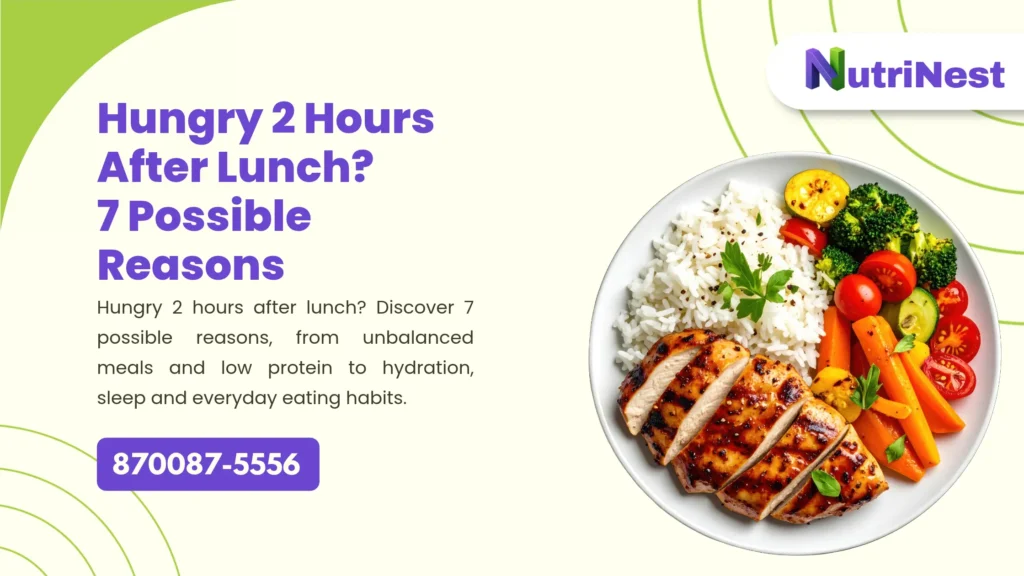
Why You’re Hungry Again Just 2 Hours After Lunch: 7 Possible Reasons
You finish lunch, get back to work, and everything seems fine. But two hours later – your stomach starts rumbling again. You find yourself – thinking about “snacks, checking the time until your next meal, or wondering why lunch didn’t keep you full for longer.”
If you’re hungry again just two hours after lunch – you’re not necessarily doing anything wrong. Hunger is a normal signal that your body needs energy, and how soon it returns can depend on “what you ate, how much you ate, your activity level, sleep, hydration, and individual differences.”
However – if you regularly feel hungry shortly after eating – it may be worth looking at the composition of your meals and your everyday eating habits.
The good news? A few practical changes – can help make lunch more satisfying & support a healthier eating routine.
Is It Normal to Feel Hungry 2 Hours After Lunch?
Yes – it can be normal to feel hungry two hours after lunch. There is no single amount of time that everyone should remain full “after a meal.”
Your appetite depends on several factors – including your energy needs, meal size, food composition, physical activity, and the time you ate your previous meal.
For example, a small lunch consisting mainly of refined carbohydrates – may leave you feeling hungry sooner than a meal containing protein, fibre rich foods & a suitable amount of carbohydrates and healthy fats.
Similarly, someone who exercises regularly or has a physically demanding workday – may need more food than someone with lower energy requirements.
The important question isn’t simply how soon you feel hungry. It’s – whether your meals are providing enough nourishment and whether your hunger fits your overall routine.
Here are seven possible reasons you may feel hungry again shortly after lunch.
1. Your Lunch May Not Contain Enough Protein
Protein plays an important role in satiety – which refers to the feeling of fullness after eating. Meals containing adequate protein may help you feel satisfied for longer.
If your lunch consists mainly of plain rice, bread, or another carbohydrate source with very little protein – you may find yourself looking for something to eat again sooner.
This doesn’t mean carbohydrates are unhealthy. Rather – a more balanced combination of nutrients may make your meal more satisfying.
How to improve it
Include a suitable protein source in your lunch – depending on your dietary preferences.
Options include:
Dal, rajma, or chickpeas
Paneer or tofu
Eggs
Chicken or fish
Soya chunks and other soya based foods
For example, instead of eating only rice with a light accompaniment – you could choose a meal that combines rice, dal or another protein source, & vegetables.
If you’re exploring convenient options, NutriNest offers high-protein meals in Faridabad designed for people looking to include more protein in their everyday meals.
2. Your Meal May Be Low in Fibre
Fibre is another important part of a satisfying meal. It supports digestive health, and fibre rich foods – can contribute to fullness.
If your lunch contains very few vegetables, fruits, legumes, or whole grains – you may be missing an opportunity to make the meal more filling.
Consider a lunch made primarily of refined grains compared with one that includes “whole grains, vegetables, and beans or lentils.” The second option generally provides – more fibre and a broader range of nutrients.
How to improve it
Try adding more fibre rich foods to your regular lunch –
- Vegetables such as carrots, broccoli, beans, and leafy greens
- Legumes such as chickpeas, lentils, and kidney beans
- Whole grains such as oats and brown rice
- Whole fruits rather than relying entirely on fruit juices
Salads can also contribute vegetables, fibre, & variety to a meal. The ingredients matter – though: a salad with vegetables and a suitable protein source may be more satisfying than a small bowl of leafy greens alone.
Explore NutriNest’s healthy salads in Faridabad for ideas on incorporating salads into your meal routine.
3. You're Eating Too Little at Lunch
Sometimes – the simplest explanation is that lunch isn’t providing enough food for your needs.
This can happen – when you’re trying to lose weight, cutting portion sizes too aggressively, skipping parts of a meal, or eating whatever is available during a busy workday.
A very light lunch may seem convenient – but it can leave you feeling hungry well before dinner. You may then find yourself “snacking frequently or feeling unusually hungry” later in the day.
How to improve it
Pay attention to whether your lunch feels satisfying – rather than focusing only on “eating less.”
A balanced lunch can include –
- A suitable portion of protein
- Vegetables or other fibre-rich foods
- Carbohydrates to provide energy
- A suitable amount of fats
Your portion needs will depend on your appetite, activity level, & individual energy requirements.
If you’re often hungry soon after eating – consider whether your lunch needs to be more substantial rather than immediately assuming you need greater willpower.
For more guidance on making everyday meal choices – read our article on high-protein versus low-calorie meals for weight loss.
4. Your Lunch Relies Too Heavily on Refined Carbohydrates
Foods such as white bread, pastries, biscuits, and other refined carbohydrate rich options – can be part of a varied diet. However – a lunch made mostly of these foods may not be as satisfying as one that includes protein & fibre rich ingredients.
Refined carbohydrates are often lower in fibre than – their whole grain counterparts. When a meal lacks protein, fibre, or sufficient overall energy – hunger may return sooner.
It’s also worth remembering that feeling hungry after eating carbohydrates does not automatically mean your blood sugar is abnormal.
How to improve it
You don’t need to eliminate carbohydrates to eat well. Instead – think about “what you can add to make the meal more balanced.”
For example –
- Pair bread or a wrap with paneer, tofu, eggs, or another protein source.
- Combine rice with dal, vegetables, and a suitable protein source.
- Choose whole-grain options when practical.
- Include vegetables or legumes alongside your main dish.
A well-planned meal doesn’t have to be complicated. Often – combining familiar foods thoughtfully is enough to improve its overall nutritional balance.
5. You're Not Drinking Enough Fluids
Thirst and hunger can sometimes feel similar – although they are different signals. If you have been busy working, travelling, or exercising – you may not have had enough fluids throughout the day.
Drinking water regularly supports normal bodily functions & helps maintain hydration. However – water isn’t a substitute for food when your body genuinely needs energy.
How to improve it
Keep water accessible during your workday and drink regularly – especially when the weather is hot or you’re physically active.
If you feel hungry shortly after lunch – take a moment to consider whether you’ve had enough fluids. If you’re thirsty – drink some water & reassess how you feel.
If you’re still hungry – it’s perfectly reasonable to have a snack or eat more when needed.
The aim is to respond to your body’s signals rather than using water to suppress hunger.
6. Poor Sleep May Be Affecting Your Appetite
Sleep influences several processes involved in “appetite regulation.” Inadequate sleep can affect hunger and fullness signals, food preferences, and the likelihood of craving energy dense foods.
If you’re regularly staying up late, sleeping poorly, or waking up tired – you may notice changes in your appetite throughout the day.
This doesn’t mean – poor sleep is necessarily the reason you’re hungry after lunch. It is one possible factor to consider alongside your meals & activity levels.
How to improve it
Try to establish a consistent sleep routine wherever possible.
A few practical steps include –
- Maintain regular sleep and wake times.
- Create a relaxing routine before bed.
- Avoid letting late-night work regularly reduce your sleep.
- Plan meals around your actual schedule rather than skipping lunch because the morning was busy.
Healthy eating & adequate sleep work together as part of an overall lifestyle. Neither needs to be perfect for you – to build more sustainable habits.
7. Your Workday Is Disrupting Your Meal Routine
Have you ever skipped breakfast, rushed through lunch, or eaten while answering emails?
Busy schedules can make it difficult to eat at regular times. You may end up having a smaller lunch – than intended, eating too quickly, or choosing whatever is immediately available.
In some cases – the issue isn’t that your lunch is inherently unhealthy. It’s that your meal routine doesn’t work well with your daily demands.
How to improve it
Start by making your meals easier to plan.
- Decide what you’ll have for lunch – before your workday becomes hectic.
- Keep convenient, balanced meal options available.
- Allow enough time to eat without rushing whenever possible.
- Keep a suitable snack available if there’s a long gap between lunch and dinner.
If work regularly disrupts your eating schedule – our guide to why your office lunch may be contributing to weight gain offers further ideas for improving your workday meal habits.
For those who prefer to plan ahead, a healthy meal subscription in Faridabad can make it easier to organise meals around a busy routine.
What Should You Eat for Lunch to Stay Satisfied Longer?
If you’re hungry again two hours after lunch – consider looking at your entire meal rather than focusing on one ingredient.
A satisfying lunch generally includes a “combination of protein, fibre rich foods, carbohydrates, and some fat” – in portions suited to your needs.
Here are a few examples of how you can build a more balanced meal.
Lunch option | What makes it balanced |
Rice, dal, and vegetables | Combines carbohydrates, plant protein, and fibre |
Paneer or tofu bowl with vegetables and grains | Provides protein alongside carbohydrates and vegetables |
Chickpea salad with additional protein and vegetables | Combines plant protein and fibre-rich ingredients |
Chicken, vegetables, and brown rice | Provides protein, carbohydrates, and vegetables |
Whole-grain wrap with paneer, tofu, eggs, or chicken | Offers a convenient combination of protein and carbohydrates |
These are examples – rather than fixed meal prescriptions. The right portion and combination depend on your individual needs, preferences, and activity level.
You can also explore healthy bowls in Faridabad for meal ideas that bring different ingredients together in one convenient option.
Remember: The goal isn’t to force yourself to stay full for a specific number of hours. It’s to eat enough, choose a useful variety of foods, and develop a routine that works for you.
Should You Have a Snack If You're Hungry Two Hours After Lunch?
Yes. If you’re genuinely hungry two hours after lunch – having a snack is perfectly reasonable.
You don’t need to ignore hunger simply – because it hasn’t been long since your last meal.
The key is to choose something that satisfies you & fits your needs.
Some options include:
- Fruit with nuts or seeds
- Roasted chickpeas
- Yoghurt with fruit, if suitable for your diet
- A boiled egg
- A small paneer or tofu-based snack
- Whole grain toast with a suitable protein rich accompaniment
The best choice depends on your appetite, preferences & how long it will be until your next meal.
If you regularly need snacks shortly after lunch, though – review your lunch itself. You may need a more substantial meal, a better combination of nutrients, or a different eating schedule.
Snacking isn’t a failure. It can be a useful part of a – balanced eating routine.
When Should You Pay Attention to Persistent Hunger?
Occasional hunger between meals is normal. However – if you experience persistent or unusual hunger despite eating enough – it’s worth discussing it with a healthcare professional.
Seek medical advice particularly – if increased hunger is accompanied by symptoms such as “unexplained weight changes, excessive thirst, frequent urination, or unusual fatigue.”
Several factors can influence appetite, and a healthcare professional can help determine – whether an underlying issue needs attention.
Avoid assuming that persistent hunger is simply a lack of discipline or that changing your diet alone will resolve it.
A Quick Note from NutriNest
At NutriNest, the focus has always been simple –
Clean, balanced, and consistent meals
Built for:
- Daily ordering
- Busy lifestyles
- Health-conscious choices
You can explore and order directly on:
And if you’ve already tried NutriNest—your review truly makes a difference.
Frequently Asked Questions (FAQs)
1. Why am I hungry two hours after eating lunch?
You may be hungry – because your lunch was too small, contained insufficient protein or fibre, or did not provide enough energy for your needs. Physical activity, sleep, & individual appetite differences – can also play a role.
2. What foods help you stay full longer after lunch?
Meals containing adequate protein, fibre rich foods, carbohydrates, & some fat – may help you feel satisfied for longer. Examples include – dal with rice and vegetables, paneer or tofu bowls, chickpea salads, and chicken with grains and vegetables.
3. Should I eat less if I feel hungry shortly after lunch?
Not necessarily. If your lunch is too small – reducing it further may make hunger worse. Consider your meal composition, portion size, activity level, & overall eating pattern – before deciding what to change.
4. Is it okay to snack two hours after lunch?
Yes. If you’re hungry – a snack can be appropriate. Choose something that fits your preferences and needs. If this happens frequently – consider whether your lunch provides enough food and a suitable balance of nutrients.
5. Does eating more protein help reduce hunger?
Protein can promote feelings of fullness and may help you feel more satisfied after meals. However – the effect varies between individuals, and protein works best as part of an overall balanced eating pattern.
6. Can stress or lack of sleep make me feel hungrier?
Yes – both stress and inadequate sleep can influence appetite & food preferences. They are possible contributors, although they may not explain every instance of hunger after lunch.
Final Thoughts: Make Lunch Work for You
Feeling hungry again two hours after lunch doesn’t automatically mean something is wrong. It may simply mean – you need more food, a different combination of ingredients, or a meal routine that better suits your day.
Start with the basics – include a suitable protein source, add fibre rich foods, eat enough to meet your needs, stay hydrated, and pay attention to your sleep and daily schedule.
You don’t need to follow a complicated diet to make meaningful improvements. Small, practical changes – can help make your meals more satisfying and your eating habits easier to maintain.
At NutriNest – we believe healthy eating should fit into everyday life. If you’re looking for convenient, balanced meal options – explore our healthy food delivery in Sainik Colony, Faridabad and discover options that can fit your routine.
Because eating well isn’t just about what’s on your plate. It’s also about building habits that work for you. 💜💚