How to Build a Balanced Meal Plate: A Simple Guide
Healthy eating doesn’t have to be complicated. Often knowing what to eat can be the first step to healthy eating.
You want meals that are balanced and will help give your body the right nutrients to help boost your energy levels, maintain your muscles, aid digestion and improve your wellbeing while making sure you feel full.
But how do we make our meals balanced? How much protein should be included? Should we have carbohydrates? Can we have a traditional Indian meal of dal, roti and sabzi?
The great news is you don’t need any special ingredients or spend a lot of money to make your meals balanced. All you need to do is plan your meals to ensure they are nutritious.
Let’s break it down…
What Is a Balanced Meal Plate?
A balanced plate will help you to include a variety of food groups in your meal.
This takes into consideration the balance of your meal, rather than looking at one specific element.
A healthy balanced meal should include:
- Proteins to help maintain and repair muscle and support many vital bodily functions.
- Fruits and vegetables to give you fibre, vitamins, minerals and other beneficial nutrients.
- Carbohydrates to give you energy for daily activities and exercise.
- Healthy fats to help keep your body functioning correctly and help your body absorb certain vitamins.
- Water to help keep you hydrated and keep many essential bodily functions going.
The amounts will depend on your age, activity levels, health needs and personal goals but knowing these food groups is a great start to planning your daily meals.
If you want to know more about how to create a healthy meal, our guide to what makes a meal actually healthy will explain how the different nutrients work together to make a nutritious and satisfying meal.
How to Build a Balanced Meal Plate
You do not need to weigh every ingredient or calculate nutritional values for every meal. A simple visual approach can help you get started.
1. Fill a Good Portion of Your Plate With Vegetables
Vegetables should be a regular part of your main meals.
They provide fibre, vitamins, minerals and a variety of plant compounds that contribute to a healthy diet. Fibre also supports digestion and can help make meals more filling.
Try including different colours and varieties instead of eating the same vegetable every day.
Some everyday options include:
- Spinach, methi and other green leafy vegetables
- Carrots, cucumber and beetroot
- Broccoli, cauliflower and cabbage
- Capsicum, tomatoes and beans
- Pumpkin, bottle gourd and other seasonal vegetables
They can be used as sabzi, steamed vegetables, stir fries, salads etc.
For example – if you are having just roti and dal have a portion of seasonal sabzi and a small salad – this will make it more varied and give you some extra nutrients that may be lacking.
2. Include a Good Source of Protein
Protein plays an important role when creating a healthy meal. Especially if you’re exercising regularly, looking to maintain muscle or simply enjoy feeling full.
There are many everyday Indian foods – that can provide a great source of protein.
Vegetarian protein sources:
- Dal and lentils
- Chickpeas and kala chana
- Rajma
- Paneer
- Tofu
- Soya chunks
- Milk and curd
Non-vegetarian protein sources:
- Eggs
- Chicken
- Fish
- Other lean meat options
Try to include a protein source in your main meals rather than relying on carbohydrates alone.
For example:
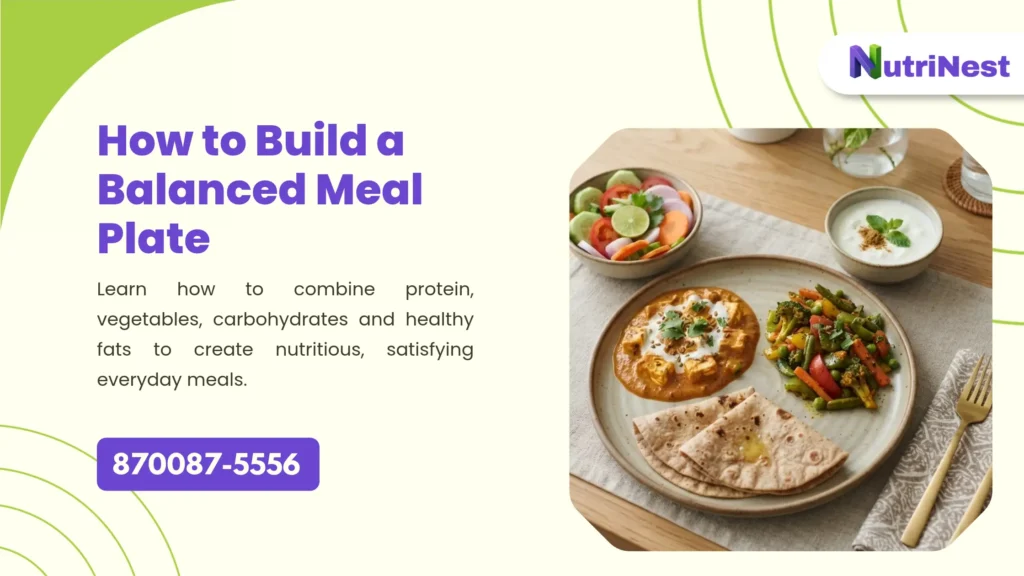
- Roti with dal and curd
- Rice with rajma
- Paneer with vegetables and roti
- Grilled chicken with rice and salad
- Egg bhurji with whole-wheat roti
If you follow a vegetarian diet, explore our guide to 10 high-protein vegetarian foods you can include in daily meals for more practical food choices.
Your protein requirement will depend on factors such as body weight, age, activity and fitness goals. You can also read how much protein you actually need every day to understand how to plan your intake.
3. Choose the Right Carbohydrate Sources
Carbohydrates are not something you need to eliminate to eat healthily.
They are an important source of energy, especially for people – who work, walk, exercise or have physically active routines.
The key is to choose a variety of carbohydrate sources and combine them with protein, vegetables and healthy fats.
Some everyday options include –
- Whole-wheat roti
- Brown rice
- Regular rice
- Oats
- Millets
- Whole-grain bread
- Dalia
- Sweet potatoes
You do not have to completely avoid white rice or regular roti. What matters is the overall meal composition, portion size and your individual nutritional needs.
For instance – a bowl of rice with rajma, salad and curd can make a balanced meal. Similarly – two rotis with dal, sabzi & curd can provide a useful combination of food groups.
4. Add Small Amounts of Healthy Fats
Fats are another essential part of a balanced diet. They help the body absorb certain vitamins and support normal cell and hormone functions.
The aim is not to remove fats but to include suitable sources in reasonable amounts.
Some options include:
- Almonds and walnuts
- Peanuts
- Seeds such as flaxseeds and chia seeds
- Olive oil
- Mustard oil
- Groundnut oil
You may already be including fats through cooking oils, nuts, seeds, paneer or other foods.
Be mindful of quantities, particularly when using oil, butter, ghee or calorie-dense toppings. Healthy foods can still contribute a significant amount of energy when eaten in large quantities.
5. Remember Fibre and Variety
Fibre is often overlooked when people focus only on protein and calories.
Vegetables, fruits, whole grains, legumes, nuts and seeds are useful sources of dietary fibre.
Including different fibre-rich foods throughout the day can support digestive health and help make meals more satisfying.
Try to vary your food choices rather than depending on just one vegetable, one fruit or one grain.
A simple habit is to include at least one vegetable or fruit variety that you do not usually eat every few days.
What Does a Balanced Indian Meal Plate Look Like?
You do not need to switch to Western style meals or eat salads all day to follow a balanced diet.
Traditional Indian food can fit comfortably into a balanced eating routine. The idea is to combine different food groups thoughtfully.
Here are some practical examples.
Meal | What You Can Include |
Dal and roti | Dal, whole-wheat roti, seasonal sabzi, salad and curd |
Rajma rice | Rajma, rice, cucumber salad and curd |
Paneer meal | Paneer bhurji, roti and mixed vegetables |
South Indian meal | Idli or dosa, sambar and vegetable preparation |
Non-vegetarian meal | Grilled chicken or fish, rice or roti and vegetables |
Breakfast | Vegetable poha with curd, or eggs with whole-wheat toast |
Notice that none of these meals requires complicated recipes.
Even familiar home cooked food can provide a good mix of nutrients when you pay attention to what is included.
How Much of Each Food Group Should Be on Your Plate?
A commonly used visual guide is to give vegetables & fruits a substantial share of your plate, include a protein source and add a suitable portion of carbohydrate rich foods.
You may have seen the plate method that suggests –
- Half the plate for vegetables and fruits
- One quarter for protein-rich foods
- One quarter for grains or other carbohydrate sources
This can be a helpful starting point, but it is not a strict rule for everyone.
For example, someone who exercises regularly or has a physically demanding job may need more energy and carbohydrates. Someone with specific dietary requirements may need a different combination.
Your meal portions should reflect your individual needs rather than following a fixed ratio without considering your lifestyle.
Common Mistakes to Avoid When Building a Balanced Meal
Even when people try to eat healthily, a few common habits can make their meals less balanced.
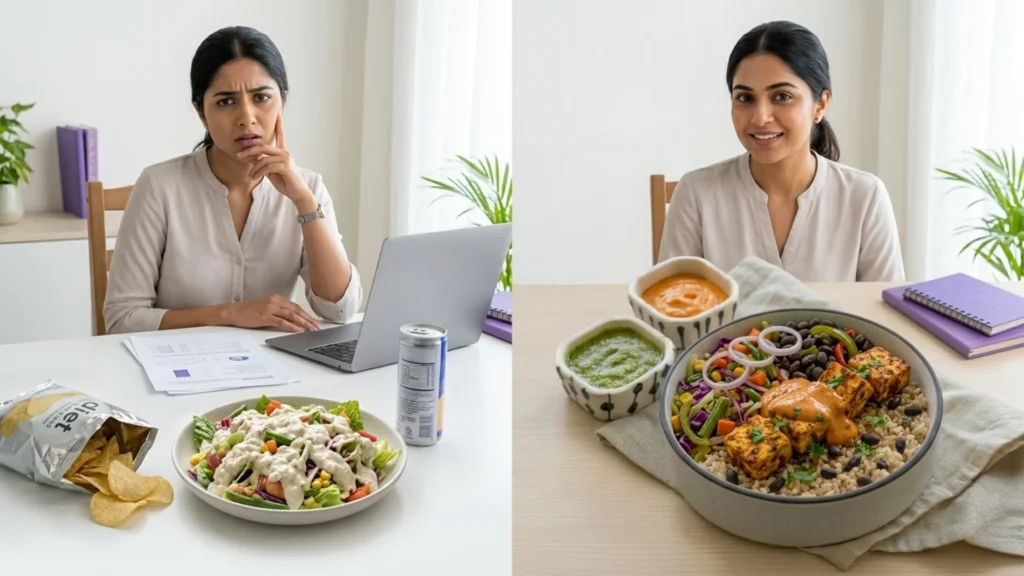
1. Eating Only Salad for Lunch
Salads can be nutritious – but a bowl of vegetables alone may not provide enough protein or energy to make a satisfying meal.
Add chickpeas, paneer, tofu, eggs or chicken, along with an appropriate carbohydrate source if needed.
A more complete salad bowl can work well as a lunch rather than treating salad as the entire meal by default.
2. Focusing Only on Protein
Protein is important – but it does not automatically make a meal balanced.
A meal containing only paneer or chicken may still lack sufficient fibre, vegetables and other nutrients.
Try to combine protein with vegetables, carbohydrates and suitable fats.
3. Avoiding Carbohydrates Completely
Removing roti, rice or other carbohydrate sources – is not necessary for most people trying to eat healthily.
Instead, consider the type, quantity and overall composition of your meals.
4. Ignoring Portion Sizes
Even nutritious foods need to be eaten in quantities that suit your requirements.
For example – nuts, seeds, cooking oils and calorie-dense dressings can add up quickly.
You do not need to measure everything forever, but becoming aware of portions can help you make more informed choices.
5. Eating the Same Meals Every Day
Repeating the same meals can make healthy eating monotonous and may limit the variety of nutrients in your diet.
Rotate your vegetables, protein sources, grains and fruits. Small changes can make everyday meals more interesting.
How to Build a Balanced Meal When You Have a Busy Schedule
Knowing what a balanced meal looks like is one thing. Preparing it consistently is another.
Busy workdays, long commutes, family responsibilities and limited cooking time can make meal planning difficult.
Here are a few practical ways to make it easier:
- Plan a few meals in advance: Decide what you will eat for lunch and dinner before the day gets busy.
- Keep simple ingredients ready: Cooked dal, boiled eggs, chopped vegetables and prepared legumes can save time.
- Use convenient combinations: Pair ready-to-eat protein sources with vegetables and a grain instead of preparing an elaborate recipe.
- Avoid skipping meals regularly: Long gaps can make it harder to manage hunger and food choices later.
- Choose convenience thoughtfully: When cooking is not practical, look for meals that include protein, vegetables and an appropriate carbohydrate source.
If you often struggle to prepare food because of your routine, our article on how to eat healthy when you don’t have time to cook shares more realistic ways to manage everyday meals.
Does a Balanced Meal Plate Change With Your Fitness Goals?
The basic principles of balanced eating remain similar, but the quantities and food choices may change depending on what you are trying to achieve.
If Your Goal Is Weight Management
Focus on meals that provide adequate protein, fibre and nutrients without consistently exceeding your energy requirements.
Vegetables, legumes, lean protein sources and suitable portions of grains can help create satisfying meals.
Avoid assuming that eating less is always better. Extremely restrictive eating can be difficult to sustain.
If Your Goal Is Muscle Building
Pay attention to your overall energy and protein intake, along with consistent strength training.
Include protein-rich foods in your meals and make sure you are eating enough to support your activity and recovery.
You can explore high-protein meals in Faridabad for meal ideas and convenient food options.
If You Have an Active Lifestyle
Your energy requirements may be higher if you exercise regularly, play sports or have a physically demanding routine.
Carbohydrates can be particularly useful for supporting activity, while protein helps with muscle maintenance and repair.
The right combination depends on your training, recovery and daily schedule.
How NutriNest Fits Into a Balanced Eating Routine
Building balanced meals does not always mean cooking everything from scratch.
For people with busy schedules, having access to convenient meals that include a mix of food groups can make everyday healthy eating easier.
At NutriNest, we focus on practical healthy meal options for people who want to make better everyday food choices without adding more cooking to their routine.
Whether you are looking for a wholesome lunch, a protein-focused meal or a more consistent food routine, the goal is to make healthy eating easier to follow.
If planning and ordering meals every day feels inconvenient, you can explore our healthy meal subscription plans in Faridabad to see whether a more organised meal routine suits your lifestyle.
A Quick Note from NutriNest
At NutriNest, the focus has always been simple –
Clean, balanced, and consistent meals
Built for:
- Daily ordering
- Busy lifestyles
- Health-conscious choices
You can explore and order directly on:
And if you’ve already tried NutriNest—your review truly makes a difference.
Frequently Asked Questions (FAQs)
1. What should a balanced meal plate contain?
A balanced meal plate should generally include a source of protein, vegetables or fruits, carbohydrate rich foods and some healthy fats. Water is also important for hydration. The quantities depend on your individual nutritional needs and activity level.
2. What is the simplest way to build a balanced meal?
Start with a protein source, add vegetables, include a suitable portion of carbohydrates and account for healthy fats. For example, dal, roti, sabzi, curd and salad can make a practical Indian meal combination.
3. Can Indian food be part of a balanced diet?
Yes. Traditional Indian foods such as dal, roti, rice, rajma, chana, paneer, curd and seasonal vegetables can all be part of a balanced diet. The key is to combine different food groups and pay attention to portions.
4. Is rice healthy for a balanced meal?
Rice can be included in a balanced meal. It provides carbohydrates that supply energy. Pair it with protein-rich foods such as dal, rajma or chicken, along with vegetables or salad.
5. Do I need protein in every meal?
Including a protein source in your main meals can help you distribute protein intake throughout the day. Your overall daily requirement matters more than following a rigid rule for every single meal.
6. Can I build a balanced meal without eating meat?
Absolutely. Vegetarian foods such as dal, chickpeas, rajma, paneer, tofu, soya chunks, milk and curd can provide protein. Combining these with vegetables and grains can help create balanced meals.
7. Are salads enough for a balanced lunch?
Not always. A vegetable-only salad may not provide enough protein or energy for a satisfying lunch. Add ingredients such as paneer, chickpeas, tofu, eggs or chicken, and include a suitable carbohydrate source when needed.
8. How can I make my meals more balanced when I am trying to lose weight?
Include protein rich foods, vegetables, fibre rich ingredients and appropriate portions of carbohydrates and fats. Pay attention to overall food intake rather than eliminating entire food groups. Your calorie requirements will depend on your body and activity level.
9. Should every meal follow the same plate ratio?
No. Visual plate guides are useful for getting started – but they are not strict rules. Your requirements can change based on “activity, age, fitness goals and individual health needs.”
10. Can a meal subscription help me eat more balanced meals?
A meal subscription can make meal planning more convenient by reducing the need to decide and prepare every meal yourself. However – check the menu, ingredients, portions & available nutritional information to see whether the meals suit your requirements.
Final Thoughts
Creating a balanced plate doesn’t necessarily mean you’ll be having a perfect diet!
Try to include some protein, plenty of different vegetables, the right amount of carbs, and include healthy fats. But don’t worry because you can do all of this with some common Indian ingredients and easy combinations!
The most important thing to remember is that it is a journey. Your meals don’t have to be perfect! Try making small changes to your current diet.